Meta AI Hit No. 5. Why That Matters
On April 8, Meta released a new model called Muse Spark.
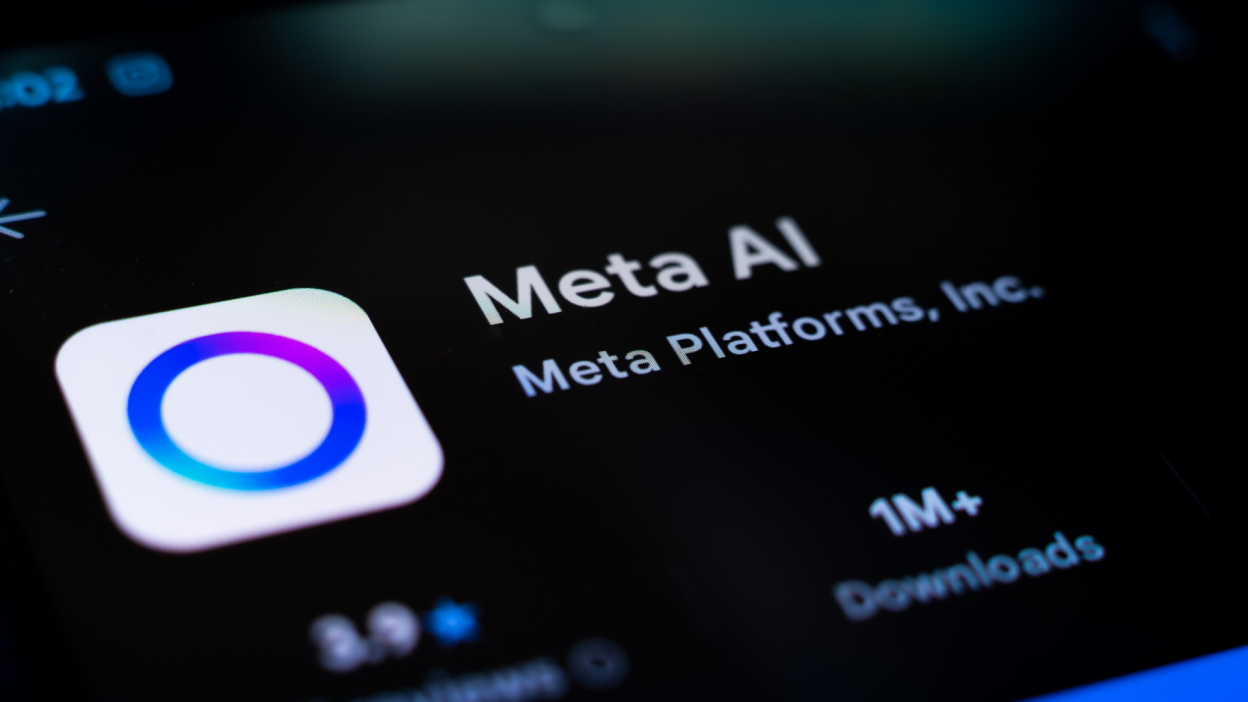
A day later, the Meta AI app jumped from No. 57 to No. 5 on the U.S. App Store.
On iPhone in the U.S., downloads were about 46,000 that day. Up 87% day over day.
Honestly, I’ve seen too many “our model got better again” announcements. Benchmarks go up, reasoning improves, another chart gets posted — for ordinary users, that often feels like “the model took another exam and got another high score.”
But App Store ranking is different. A ranking move means real people picked up their phones, tapped download, and let this product enter their daily lives.
That makes it worth talking about.
Why App Store ranking matters more than benchmark scores
AI companies announce stronger models every few weeks. They usually come with charts and benchmark names most people can’t even pronounce.
Are those metrics useful? Sure. But what they measure is test performance.
And test performance is not the same thing as people actually using the product.
A rough analogy: imagine a restaurant wins three Michelin stars, but nobody is lining up outside. For diners, that star is just a plaque on the wall.
App Store ranking is different. It reflects real user behavior — people searched, clicked, downloaded, and opened the app. That is real attention.
Meta AI moved from No. 57 to No. 5 in a single day. That didn’t happen because it solved more benchmark questions. It happened because users voted with their fingers.
There is another interesting detail. During the same period, U.S. Android downloads only grew 3%. In other words, most of the spike happened on iPhone. Maybe that has to do with Apple users’ spending habits. Maybe it has to do with how the App Store recommends apps. Either way, it tells us something important: once a model upgrade can directly turn into downloads and chart movement, AI competition is no longer just a lab story.
It becomes a battle for users.
Meta’s biggest advantage may not be the model itself
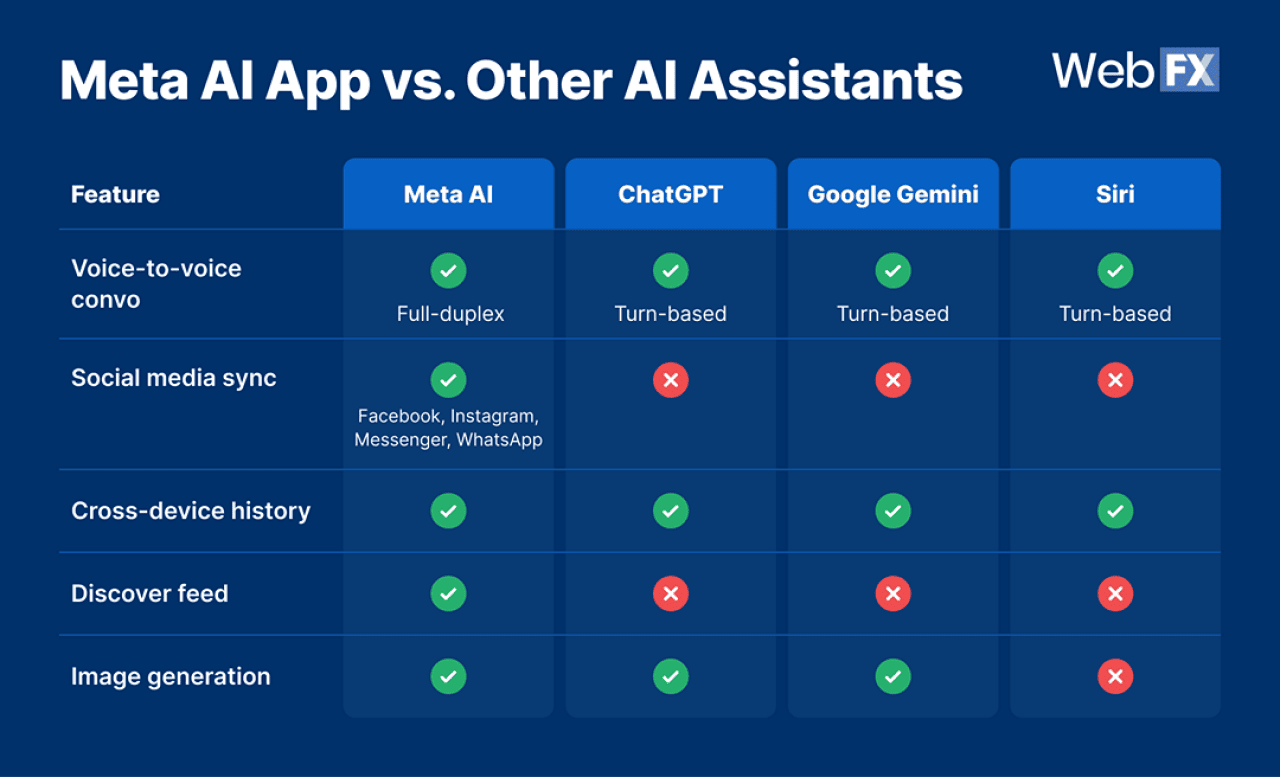
What is Muse Spark? Meta says it is the first model in the Muse family from Meta Superintelligence Labs. It supports multimodal reasoning, can handle voice, text, and image input, and includes tool use, visual chain of thought, and multi-agent orchestration.
Translated into normal language: it doesn’t just chat. It can look at images, use tools, and coordinate several “helpers” to get work done.
That does sound good. But honestly, similar ability lists exist everywhere now. ChatGPT has its version. Gemini has its version. Claude is moving in that direction too. The real gap between models is usually smaller than the marketing makes it seem.
So why could Meta jump to No. 5 in one day?
The answer may be outside the model, not inside it.
What does Meta have? Facebook, Instagram, WhatsApp, Threads — social products with billions of users. If Meta wants to route traffic to Meta AI, it has a lot of ways to do it. One push notification, one new entry point, one card in the feed, and huge numbers of users can be sent toward the app.
It’s like a milk tea shop right at the main entrance of a mall versus one hidden deep in an alley. Even if the alley shop tastes better, the mall shop starts with traffic.
Meta’s moat is not only its model. It is its ability to turn AI from a background feature inside social apps into an independent product with its own front door.
OpenAI can’t do that — it doesn’t own a social network. Google can try, but Gemini still hasn’t shown the same kind of explosive pull.
“Entry point” suddenly matters a lot
For the last two years, the main story in AI was “whose model is stronger.”
But in 2026, the wind is shifting. More companies are realizing something simple: if your model is powerful but nobody remembers to open it, then for everyday life it almost doesn’t exist.
Think about your own habits. When you want to look something up, what do you open? When you need help writing copy, what do you open? When you want a quick translation, what do you open?
For some people the answer is ChatGPT. For others it is Doubao or DeepSeek. What matters is this: the winner is often the AI product ordinary people remember first.
But being remembered first does not mean being remembered forever.
In search, Google wasn’t the first search engine, but it became the entry point. In social media, Facebook wasn’t the first social network, but it became the entry point. In short video, TikTok wasn’t the first short-video app, but it became the entry point.
In every big technology wave, the final winner is often not the company with the strongest raw technology. It is the one that secures a place in user habit first.
That’s what Meta is trying to do now. It doesn’t want AI to remain an invisible engine behind an Instagram filter. It wants Meta AI to become an app you consciously open on your phone.
From No. 57 to No. 5 — this is only the first step.
What does this mean for ordinary users?
You might be thinking: if Meta and OpenAI are fighting for the AI entry point, why should I care? I’ll just use whichever tool feels better.
That reaction is completely fair. But there are still a few things worth noticing.
First, the fight for entry points is good news if you like free tools.
Meta AI is free right now. Why? Because Meta has never depended on subscription fees as its core business. It depends on ads. What it wants is user volume and user time. That gives it every incentive to keep AI features free — or at least very accessible — in order to pressure paid competitors.
For ordinary users, that is a real benefit. The fiercer the competition, the more value you can get without paying.
Second, your “default AI” may be replaced quietly.
If you spend a lot of time on Instagram or Facebook, Meta will do everything it can to make AI useful inside those apps first, and then slowly guide you toward installing the standalone Meta AI app. One day you may realize your old habit of “open ChatGPT” has shifted into “just ask inside Instagram.”
That is not a conspiracy theory. It is standard platform behavior. Google is pushing Gemini into search. Apple is pushing AI into Siri. Meta is pushing AI into the social feed. Everyone is fighting for the same thing: to become the first entry point you think of when you have a problem.
Third, try more than one tool. Don’t lock yourself into a single camp too early.
The AI market is still wide open. No model is the best at every task. Gemini is tightly connected to Google’s ecosystem, so it may feel smoother if you live in Gmail and Google Docs. If Meta AI really figures out social scenarios, it may become unusually good at image-heavy workflows or message replies.
So there is no need to rush into team loyalty. Install a few. Use the one that feels smoothest. Right now, every company is still trying hard to win you over. In that phase, users have leverage.
Fourth, pay more attention to downloads and rankings than to benchmark headlines.
When you read AI news in the future, don’t only ask what record got broken. Also ask: how many people are actually using it? Where does it rank in the App Store? Does it look like a real habit, or just a press release?
Those numbers tell you whether a product is still living inside papers and demos, or whether it has actually entered ordinary life.
46,000 downloads. 87% day-over-day growth. Those are not huge numbers in absolute terms. In the context of the entire U.S. market, they are still modest. But the direction is very clear: model competition is becoming entry-point competition, and the judges are not benchmark organizations. The judges are people like you and me.

Final thoughts
Meta AI’s chart surge is not really a story about “whose model is strongest.” Muse Spark may well be impressive — multimodal reasoning, tool use, visual chain of thought, multi-agent orchestration. Those capabilities all sound powerful.
But the thing that pushed Meta AI to No. 5 was not the technical vocabulary. It was Meta’s ability to convert social-network users into AI-product users.
At this stage of the AI race, the contest is no longer only about which lab can build the smartest model. It is increasingly about who can occupy that small spot on your home screen, and who can become the app you open every day.
For ordinary users, there is no need to panic and no need to pick a side too early. But there is one thing worth paying attention to: what are you actually using AI for every day? Which app do you open? Does it feel natural?
If you prefer Doubao, use Doubao. If you’re willing to go the extra mile to use Claude, then use Claude.
The answers to those questions matter more than any benchmark. Because in the end, what decides which AI product survives is not citation count. It is user habit.
The second half of the AI war will not be judged by benchmark charts, but by the download button on your phone.