How AI Helped China Find Kidnapped Children — And Why 'Auntie Mei' Finally Got Caught
On March 20th, the news that “Méi Yí” (Auntie Mei) — China’s most wanted child trafficking suspect — had finally been caught broke the internet.
Within 24 hours, 3.8 million posts flooded Chinese social media. Douyin (China’s TikTok) hit 10 billion views in 48 hours. That number isn’t just traffic — it’s a nation’s pent-up rage and heartbreak finally finding an outlet.
I saw the same question everywhere: How did they finally catch her?
The answer involves DNA, AI, and big data — three words that get thrown around constantly but rarely explained properly. As someone who does AI explainers for a living, today I want to break down what these technologies actually did, in plain language.
The Auntie Mei Case: How They Found Those 9 Children
Before Auntie Mei herself was caught, the 9 children she helped traffic had already been recovered between 2019 and 2024.
One case hit me especially hard.
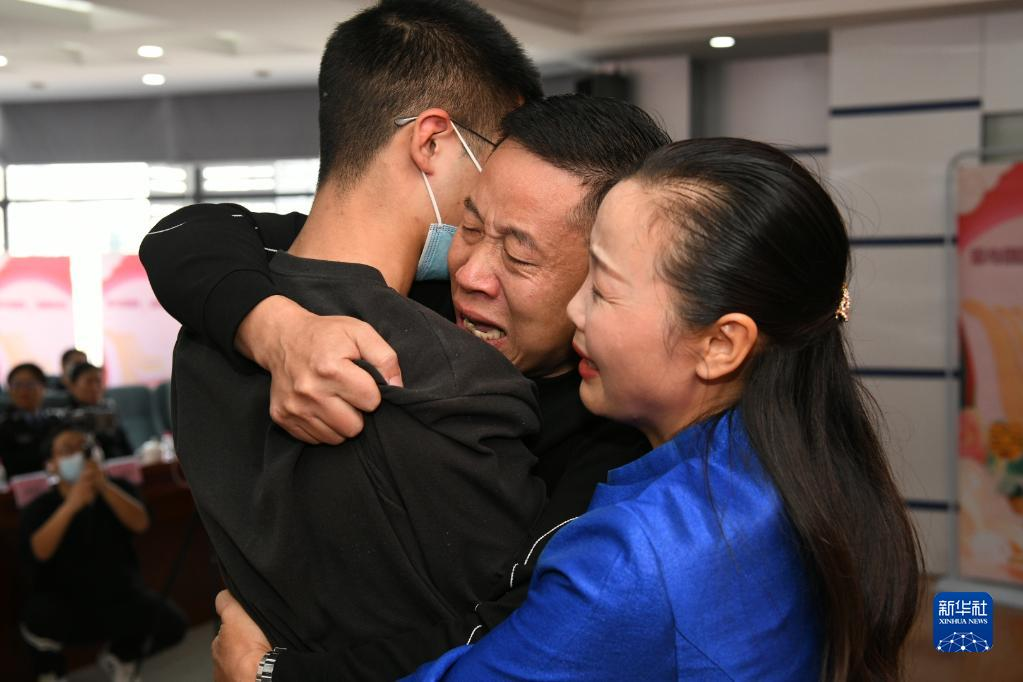
A boy named Ouyang Jiahao was kidnapped at age 3. He didn’t reunite with his parents until he was 22. Nineteen years. By then, his face was completely different. His memories were essentially gone.
So what brought him home?
A police officer named Wang Ting from the Nanchang Railway Public Security Bureau specialized in big data facial recognition. He used AI to compare Ouyang Jiahao’s childhood photos with adult images, searching through massive population databases — and found him.

What stunned me wasn’t the technology itself. It was this: 19 years ago, humans simply couldn’t do this.
A 3-year-old’s face — the curve of the nose, the angle of the cheekbones, the distance between the eyes — changes so drastically that no human could reliably match it to the same person at 22. But AI can. It doesn’t get tired. It doesn’t get confused by similar-looking faces. It can run through comparisons in seconds that would take a human team months.
Technology #1: DNA Databases — A “Life Fingerprint” for Every Person
Let’s start with the most fundamental one.
China actually began building its DNA database for anti-trafficking as early as 2000. The Ministry of Public Security led the effort, creating one of the world’s first DNA databases specifically for missing children. By 2009, it was connected nationwide — all provinces, all data linked.
Think of it this way: they created a “life fingerprint file” for every parent of a kidnapped child and every child suspected of being trafficked.
How does it actually work?
Say a child is kidnapped at age 5. The parents report it, and their DNA is collected and stored. Fifteen years later, the child has grown up, has a new name, lives in a different province, and doesn’t even remember their birth parents. But their DNA — half from their father, half from their mother — hasn’t changed one bit.
The moment police collect that person’s DNA for any reason — even a routine identity check — the database runs a comparison and flags: “This person shares 50% DNA overlap with a couple in Sichuan Province who reported a missing child.”
You might have seen cases like this in the news: the real-life stories behind the Chinese films Lost and Love and Dearest — both of those children were found through exactly this method.
The tech has gotten even more powerful since then.
Early DNA matching only worked for close relatives. Now, with Y-STR paternal lineage matching and SNP marker detection, even distant relatives and cross-generational comparisons are becoming reliable.
One detail that really moved me: some children who were trafficked have been “recognized” by the database without even knowing they were kidnapped — they happened to submit DNA for a routine paternity test or health screening, and the system matched them.
It wasn’t searching. It was waiting. The database had been waiting all along.
Technology #2: AI Facial Recognition — Time Changes Faces, But Not Proportions
Everyone’s heard of facial recognition, but most people think of it as “scanning your face to enter the subway” — you stand in front of a camera, the system confirms you’re you.
In the context of finding missing children, AI does something very different: matching faces across time.
A 3-year-old’s face and the same person’s face at 22 — a human can’t see the connection. But AI doesn’t look at “does this face look nice” or “do these two photos look similar.” It analyzes: bone structure, organ proportions, and the geometric relationships between facial feature points.
These things do change with age, but they change in predictable patterns. AI trained on massive facial datasets learns “how a person’s proportions typically shift from age 3 to age 22” — and uses those patterns to predict what a child in a photo would look like as an adult.
Then it takes that prediction and compares it against faces in national population databases.
Think of it this way: AI is a super-detective that never gets tired, never gets fooled by look-alikes, and can “predict aging.”
In the Auntie Mei case, Ouyang Jiahao was found using exactly this approach.

Technology #3: Big Data Tracking — Finding a Needle in a Sea of Information
This third one is probably the hardest to explain clearly.
“Big data tracking” doesn’t mean the system is watching a specific person. It means: when enough data points are aggregated together, certain anomalies naturally float to the surface.
Here’s a real-life analogy.
Imagine you run a neighborhood grocery store. Your community has 100 households, and you know their patterns — weekly purchases, food preferences, spending amounts. Suddenly, one household’s regular consumption completely disappears, but at the same time, a store in a different district sees the exact same consumption pattern appear. Wouldn’t that seem odd?
That’s what big data does — anomaly detection. Except the data sources are: population movement records, transportation data, cell tower signals, purchase histories, school enrollment records…
When a kidnapped child is taken to another province and given a new identity, their “data trail” shows certain anomalies:
- A child suddenly appears in a location with no local household registration and no birth record
- A family’s travel routes overlap with the area where a kidnapping occurred
- A child’s school records are missing early-year information
Each of these signals alone is weak — none is conclusive evidence. But when the system stacks them together, it generates an alert: something’s off here.
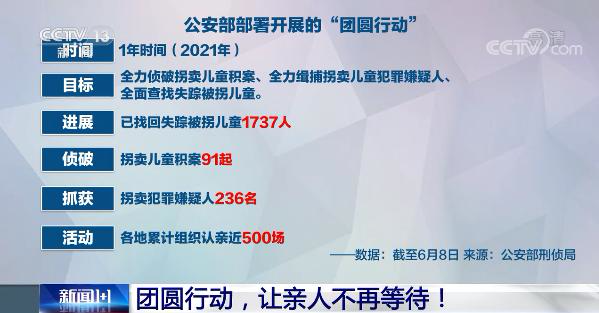
In 2021, the Ministry of Public Security’s “Tuányuán” (Reunion) operation was a massive deployment of big data technology — that year alone, it helped 10,932 children find their families. Not one. Nearly eleven thousand.
The Tuányuán System — You Might Have Gotten a Push Notification
I need to specifically mention this one: the Tuányuán (Reunion) System.
In 2016, the Ministry of Public Security launched this “Emergency Missing Children Information Platform.”
The logic is simple: the first few hours after a child goes missing are the golden window. Get the information in front of as many people as possible, as fast as possible, to maximize the chance of finding witnesses and leads.
The system is integrated with 25 platforms including Gaode Maps, Weibo, WeChat, Toutiao (Today’s Headlines), and Alipay. When a child goes missing, the system uses that location as the center and pushes alerts to phones in the surrounding area. The longer the child has been missing, the wider the circle gets.
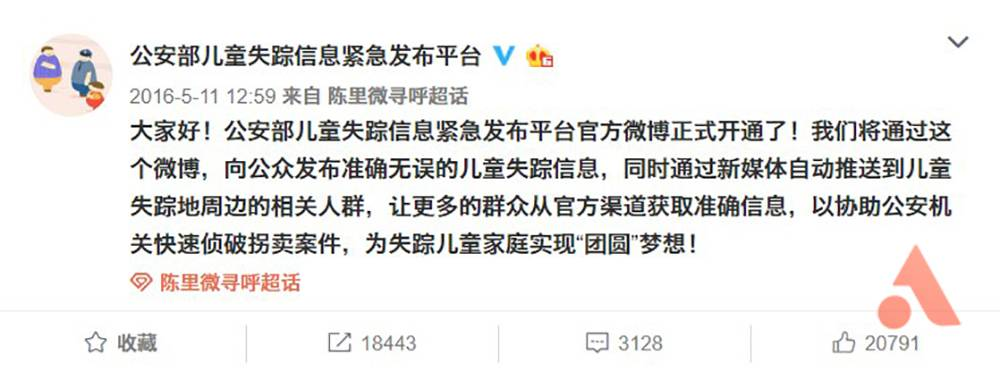
If you’ve ever received a push notification in China saying “A child has gone missing nearby, description as follows…” — that was the Tuányuán system at work.
As of 2023, the system has issued information on over 5,000 missing children and recovered more than 4,900 of them — a recovery rate above 98%.
That 98% isn’t technology flexing. It’s families reuniting.
Why 92% of People Call Technology the “Ultimate Weapon”
After Auntie Mei’s arrest, a survey found that 92% of respondents believe technology is the ultimate weapon against child trafficking.
That number doesn’t surprise me, but I want to add something.
Technology is indeed getting more powerful. But technology itself doesn’t actively go looking for people.
It needs:
Data. The DNA database requires parents of missing children to proactively submit their samples. The missing persons system needs someone to enter the information. If parents don’t know where to get their blood drawn or how to register, the technology can’t find them.
Input. There are still many parents of trafficked children who aren’t in the DNA database — because they didn’t know the process, or because their original police report wasn’t taken seriously.
Time. Many cases have been backlogged for decades. No matter how powerful the tech, it can only work on cases that are actually in the system. New kidnapping cases need this entire mechanism activated immediately.
This is why people are calling for: nationwide DNA database coverage, an Amber Alert system for China, and blockchain-based child identity verification. These aren’t slogans — they’re the prerequisites for technology to actually work.
Technology is the weapon. But for the weapon to be useful, you need the infrastructure to support it.
Final Thoughts
I usually write about “how to use this AI tool” or “how to get started with that feature.”
But this story hit different.
AI isn’t just a productivity tool. DNA databases, facial recognition, big data tracking — behind these technologies are parents who haven’t had a single peaceful day in 19 years, and children who were forced into someone else’s life with even their names stripped away.
When technology helps a 22-year-old find the parents they’ve never known, in that moment, all those cold algorithms and databases become the warmest things in the world.
We’re living in an era where AI is changing everything. It’s changing how we work — and it’s also changing whether families get to be whole again.
I hope this article gave you a slightly different understanding of what AI can do.
Thanks for reading.